Female CFOs are outperforming and AI is changing the role for everyone
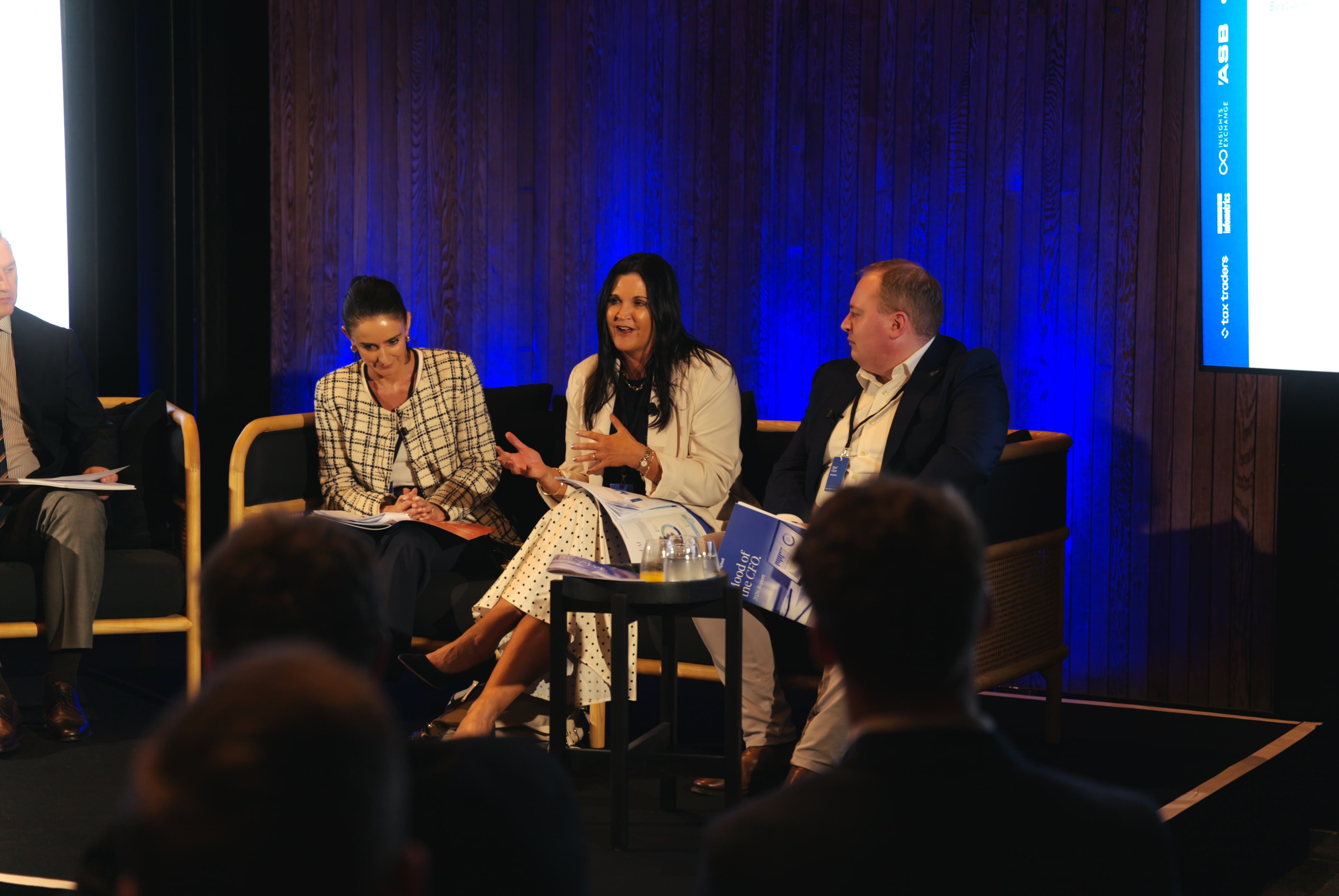
- Mood of the CFO 2026 shows female CFOs are delivering strong performance, but don’t always feel equally supported – pointing to a gap between results and leadership environment.
- The report highlights that AI is widely adopted across finance teams, but most organisations have yet to redesign how work is structured around it.
- It also signals a shift in finance leadership – from technical capability to judgement, environment and the ability to adapt to change.
By Nicola Taylor, Co-founder of Tax Traders and Taxi
The latest Mood of the CFO Report highlights two themes that are easy to view separately but are more powerful when considered together.
Produced by Hunter Campbell in partnership with Tax Traders, Infometrics and ASB, the research brings together the views of senior finance leaders across New Zealand on business performance, economic conditions and the evolving role of the CFO.
What is noticeable is female CFOs are outperforming their male peers – but they report feeling less supported. At the same time, AI is being adopted across finance teams but is yet to deliver widespread transformation.
Taken together, those findings point to a broader shift in leadership.
This is less about technical capability and more about environment, judgement and how organisations adapt around change.
Female CFOs are outperforming – but something doesn’t add up
One of the clearest findings in the report is that female CFOs are delivering strong commercial outcomes. More female CFOs are achieving or exceeding their revenue targets compared to their male counterparts. More are optimistic about the future, and fewer hold a negative outlook.
And yet they report lower levels of board support and lower overall job satisfaction.
If performance alone explained the experience of leadership, we would expect to see the opposite result. We don’t. That suggests something else is at play.
The survey itself doesn’t explain why. But international research points to a consistent pattern. Studies such as McKinsey and LeanIn’s 2025 Women in the Workplace report show that senior women are more likely to receive less career support, fewer opportunities to advance, and experience higher levels of burnout. Research on the ‘glass cliff’ also suggests women are more likely to be appointed into more difficult or precarious leadership contexts and can face greater scrutiny even when performing strongly.
These insights, while not part of the Mood of the CFO survey, do suggest the support gap we are seeing is unlikely to be a one-off or a quirk of this sample. It is more likely to reflect a broader leadership pattern.
In other words, performance is only part of the story. The environment around leadership matters just as much.
Which raises an important question for boards and executive teams.
If some of your highest-performing leaders do not feel fully supported, what is happening in the environment around them?
AI is widely adopted. Transformation is not
Alongside this, the report highlights a shift underway in how finance teams operate, driven by AI.
AI adoption is now widespread. But AI transformation is not.
Seventy-four percent of businesses have adopted AI across various functions, yet only 19% of CFOs say AI has had a substantial impact on the size and structure of their teams. In other words, AI is everywhere, but for most organisations it has not yet fundamentally changed how work gets done.
This isn’t a new pattern. History suggests the biggest gains from new technology rarely come from doing the same things faster. They come from doing things differently. When email arrived, the benefit wasn't simply that letters became electronic. The benefit came when organisations changed how they communicated, collaborated and made decisions.
Right now, many organisations are using AI to summarise documents and prepare reports. That's useful, but it doesn't fundamentally change the operating model. The opportunity isn't to save a few hours producing an information pack. The opportunity is to spend those hours discussing what the information means and what decisions should be made.
For CFOs, that could mean changing the structure of finance teams, shortening decision-making cycles, involving junior team members in strategic discussions earlier, or reallocating resources from reporting and administration into forecasting, business partnering and commercial decision support.
Most organisations are still using AI to improve tasks. The next wave will use AI to redesign work altogether.
Productivity is not about effort – it's about systems
One of the consistent themes running through the report is productivity, with 79% of CFOs rating our productivity as poor. However, 75% of respondents are investing in technology and systems and 65% are investing in AI, which suggests businesses aren't ignoring the problem. They're actively looking for solutions.
Most leaders understand that productivity matters. The harder challenge is how to improve it.
In practice, productivity gains rarely come from asking people to work harder. They come from removing friction, simplifying processes and helping talented people spend more time on work that creates value.
That is where technology, operating model and leadership all intersect.
What this means for leadership
Taken together, these findings point to a broader shift in what effective finance leadership looks like.
Performance, capability and wellbeing are not separate issues. They are all shaped by the systems and environments organisations create.
The findings on female CFOs highlight the importance of environment. The AI data highlights the importance of adaptation.
Both point to the same conclusion.
To explore the full findings, click here to register for your copy of the Mood of the CFO 2026 Report.